
Replacing the HVAC system in an older home can require more planning than simply choosing a new piece of equipment. Older homes in the St. Louis area may have aging ductwork, limited insulation, older electrical components, unusual layouts, or heating and cooling systems that were designed long before today’s high-efficiency heat pumps were available.
That does not mean a heat pump is unsuitable for an older home. In fact, the right system can provide efficient year-round heating and cooling while improving comfort and reducing reliance on aging HVAC equipment. The key is selecting equipment that is compatible with the home’s existing infrastructure and having it professionally sized and installed.
If you are considering a heat pump for older homes, Galmiche & Sons can evaluate your home’s existing HVAC system and help you determine which options make sense for your property, comfort needs, and budget.
Contact us to learn more about heat pump replacement or request a quote.
Can a Heat Pump Work in an Older Home?
Yes. Many older homes can accommodate modern heat pump systems.
However, the best solution depends on several factors, including the home’s layout, existing ductwork, insulation, electrical service, and current HVAC configuration.
An older home may require modifications before or during installation. Addressing those issues can be just as important as choosing the heat pump itself.
For example, installing a high-efficiency heat pump into a home with significant duct leakage or inadequate insulation may prevent you from realizing the equipment’s full potential.
A professional evaluation can identify these concerns before you invest in replacement equipment.
What to Consider When Choosing a Heat Pump for Older Homes
Existing Ductwork
Ductwork is one of the first things to evaluate when replacing an HVAC system in an older home.
Older ducts may have:
- Air leaks
- Poor insulation
- Damaged connections
- Improper sizing
- Restricted airflow
- Sections that are difficult to access
These problems can contribute to uneven temperatures and reduced efficiency.
If your existing ductwork is in good condition and appropriately sized, it may be possible to use it with a new heat pump. If problems are discovered, your HVAC professional can discuss whether repairs or modifications are appropriate.
Learn more about ductwork replacement.
Insulation and Air Sealing
Older homes often have different insulation characteristics than newer construction.
If a home has inadequate insulation or significant air leakage, the heating and cooling system may have to work harder to maintain the desired indoor temperature.
Before selecting a new heat pump, it can be helpful to understand the home’s overall efficiency. Improving insulation or air sealing may complement a new HVAC system and help you get more value from your investment.
Electrical Requirements
Modern heat pumps may have different electrical requirements than older HVAC equipment.
Depending on the home’s existing electrical service and the replacement equipment selected, an electrical evaluation may be necessary.
This is especially important in older homes that have undergone multiple additions or renovations over the years.
Your HVAC contractor can identify equipment requirements and determine whether additional electrical work should be considered as part of the project.
Proper System Sizing
Choosing the correct size is particularly important in an older home because simply matching the capacity of the existing HVAC system may not produce the best result.
A properly sized heat pump should be selected based on the home’s actual heating and cooling requirements.
An oversized system can cycle too frequently, while an undersized system may struggle to keep up during extreme weather.
Professional load calculations and an evaluation of the home can help determine the appropriate equipment capacity.
Learn more about heat pump sizing.
Which Heat Pump Systems Work Best in Older Homes?
There is no single “best” heat pump for every older home. The right choice depends on the home’s existing infrastructure and the homeowner’s goals.
Ducted Heat Pump Systems
A ducted heat pump can be a practical choice when an older home already has suitable ductwork.
Rather than replacing the entire distribution system, the new heat pump may be integrated into the home’s existing ductwork after the system has been properly evaluated.
This can provide centralized heating and cooling throughout the home.
However, if the existing ductwork has substantial problems, addressing those issues may be necessary to achieve the desired comfort and efficiency.
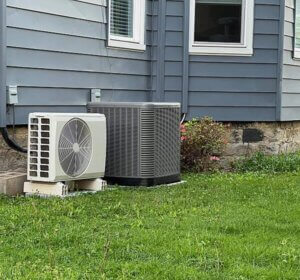
Ductless Heat Pumps
Ductless systems can be particularly useful when an older home has limited, damaged, or nonexistent ductwork.
Ductless heat pumps use indoor air-handling units connected to an outdoor heat pump, eliminating the need for traditional ductwork throughout the home.
They may be useful for:
- Older additions
- Converted spaces
- Finished areas
- Rooms that are difficult to condition
- Homes without existing ductwork
- Areas where installing new ducts would be disruptive
Learn more about Ductless Heat Pump Installation and Service in St. Louis to see whether a ductless solution could be appropriate for your home.
Don’t Assume the Existing HVAC Layout Has to Stay the Same
One common concern among homeowners with older houses is that they are limited by the existing HVAC configuration.
That is not necessarily the case.
A replacement project provides an opportunity to evaluate whether the current setup is still the best approach.
Depending on the home, a contractor may recommend:
- Reusing suitable ductwork
- Repairing or modifying existing ducts
- Adding ductless equipment to specific areas
- Reconfiguring airflow
- Upgrading controls
- Replacing outdated equipment
- Addressing insulation or comfort issues
The goal should be to develop a system that works with the home rather than simply replicating an outdated configuration.
Common Pain Points When Replacing HVAC Equipment in an Older Home
Homeowners often worry that replacing their HVAC system will turn into a much larger project than expected.
They may be concerned about:
Unexpected Installation Costs
Discovering ductwork or electrical problems after the project begins can be frustrating. A thorough evaluation before installation can help identify potential issues and provide a clearer picture of the project.
Learn more about heat pump replacement costs.
Uneven Temperatures
Older homes may have rooms that have always been difficult to heat or cool. Simply installing new equipment may not solve these problems if they are caused by airflow, insulation, or other home-performance issues.
Choosing the Wrong Equipment
There are many heat pump models and efficiency levels available. Professional sizing and equipment selection help ensure the system is appropriate for the home.
Disruption During Installation
Homeowners understandably want replacement work completed efficiently. Planning ahead and working with an experienced HVAC contractor can help minimize unnecessary disruption.
Find the Right Heat Pump Solution for Your Older Home
The best heat pump for older homes is not necessarily the newest, largest, or most expensive model. It is the system that is properly sized, compatible with the home’s infrastructure, and professionally installed.
For homeowners in St. Louis, evaluating the home’s existing ductwork, insulation, electrical system, and comfort concerns before choosing equipment can help prevent costly mistakes and improve long-term performance.
If you are considering replacing an aging HVAC system, Galmiche & Sons can help you evaluate your options. We provide professional heat pump replacement and installation services throughout the St. Louis area and can help you determine whether a ducted or ductless solution is appropriate for your home.
Contact Galmiche & Sons today to schedule an evaluation and find the right heat pump solution for your St. Louis home.