
Replacing a heat pump is a significant investment, and choosing the right system can affect your home’s comfort, energy use, reliability, and long-term HVAC costs. With different system types, efficiency ratings, capacities, features, and price points available, it can be difficult to know which option is actually right for your home.
If you’re wondering how to choose a heat pump, start by looking beyond the equipment’s price tag.
The right replacement heat pump should be properly sized for your home, compatible with your existing HVAC system and ductwork, appropriate for the St. Louis climate, and selected around the comfort and efficiency priorities that matter most to you.
Galmiche & Sons can help homeowners throughout the St. Louis area evaluate their existing system and make an informed decision about replacement equipment. Contact us to learn more about heat pump replacement or schedule yours today.
How to Choose a Heat Pump for Your Home
There is no single heat pump that is best for every home.
The ideal system depends on several factors, including your home’s size and construction, existing ductwork, insulation, electrical system, budget, comfort preferences, and how you expect to use the equipment.
Before comparing individual models, consider these important factors.
1. Start with the Right Heat Pump Size
Capacity is one of the most important considerations when choosing replacement equipment.
A heat pump that is too small may struggle to keep up with your home’s heating and cooling demands. A system that is too large can cycle on and off more frequently than intended and may not provide the consistent comfort you expect.
That’s why choosing a replacement heat pump should not be based solely on your home’s square footage.
A professional HVAC evaluation considers factors such as the home’s size, layout, insulation, windows, orientation, ductwork, and local climate conditions.
Our Heat Pump Sizing guide explains why proper sizing matters and why bigger is not necessarily better.
Don’t Rely on a Simple Heat Pump Size Calculator
Online calculators can provide a general starting point, but they cannot replace a professional evaluation of your home.
A qualified HVAC professional can assess the actual characteristics of your home and determine the capacity needed for appropriate heating and cooling performance.
2. Decide Between Ducted and Ductless
Your home’s existing HVAC configuration will influence which type of heat pump makes sense.
Ducted Heat Pumps
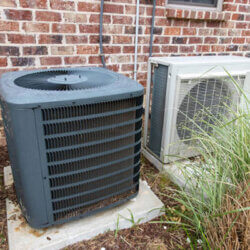
A ducted heat pump distributes conditioned air through the home’s existing ductwork. For a home that already has a properly designed central HVAC system, this may be a straightforward replacement option.
However, existing ductwork should be evaluated rather than automatically assumed to be suitable.
Leaks, restrictions, poor insulation, or improper sizing can affect system performance.
Ductless Heat Pumps
Ductless heat pumps, sometimes called ductless mini-splits, use individual indoor air-handling units connected to an outdoor unit.
They can be particularly useful for homes without ductwork, additions, converted spaces, garages, or areas where extending existing ducts would be difficult.
Our Ducted vs. Ductless Heat Pump Systems guide provides a more detailed comparison.
3. Compare Efficiency Ratings
Efficiency is another important consideration when choosing replacement equipment.
Heat pumps use efficiency ratings to indicate how effectively they operate under specified conditions. Your HVAC professional can explain the ratings that apply to the equipment being considered and how different efficiency levels may affect the initial investment and potential operating costs.
A higher-efficiency system may cost more upfront, but it could potentially reduce energy consumption under comparable operating conditions.
However, the most efficient equipment available is not automatically the best choice for every homeowner.
The right balance depends on your home’s characteristics, expected usage, energy costs, budget, and how long you plan to remain in the home.
4. Consider Your St. Louis Climate
A replacement heat pump needs to perform through Missouri’s changing seasons.
St. Louis homeowners experience hot, humid summers as well as cold winter weather. That means your replacement system needs to be selected with both heating and cooling performance in mind.
Equipment selection should account for the home’s heating and cooling requirements rather than focusing exclusively on summer air conditioning performance.
Our article Are Heat Pumps Worth It in Missouri? provides additional information about heat pump operation in Missouri’s climate.
5. Think About Your Comfort Priorities
Not every homeowner has the same definition of comfort.
For some, maintaining a consistent temperature throughout the house is the top priority. Others may be more concerned with humidity control, quieter operation, airflow, energy consumption, or reducing temperature differences between rooms.
Variable-speed and advanced heat pump systems may offer features designed to provide more precise operation, but the value of those features depends on your home’s needs and your priorities.
Tell your HVAC contractor what problems you are trying to solve.
For example, if your current system leaves upstairs bedrooms warmer than the rest of the home, mention it. If the system is noisy or struggles to control humidity, that information can help guide equipment selection.
6. Evaluate Your Existing Ductwork and Electrical System
Replacing a heat pump is not always as simple as swapping one piece of equipment for another.
Existing components need to be compatible with the new system.
Ductwork
Your duct system should be evaluated for condition, sizing, airflow, insulation, and leakage.
If the ductwork is inadequate, installing a new high-efficiency heat pump may not solve existing comfort problems.
Electrical Requirements
Some replacement systems may have different electrical requirements than your existing equipment.
Your HVAC professional can determine whether the home’s electrical system can support the proposed equipment and whether modifications are necessary.
Identifying these requirements before installation can help prevent surprises later.
7. Balance Equipment Features with Your Budget
A new heat pump can include a variety of features and performance levels.
You may encounter options involving:
- Different efficiency ratings
- Variable-speed technology
- Advanced thermostats and controls
- Enhanced comfort features
- Different system configurations
- Smart-home compatibility
- Noise-reduction features
More features are not always better if you will not use them.
Instead, focus on the features that solve actual problems in your home or provide meaningful value to your household.
Look at Long-Term Value, Not Just Upfront Price
The least expensive system is not necessarily the least expensive system to own.
Consider the total picture, including:
- Purchase and installation cost
- Expected operating costs
- Maintenance requirements
- Potential repair expenses
- Equipment lifespan
- Warranty coverage
- Comfort and performance
Our Heat Pump Replacement Cost Guide explains the factors that can influence the overall investment.
8. Ask About Warranty Coverage
A heat pump is a long-term investment, so understand what warranty protection comes with the equipment.
Ask what is covered, how long coverage lasts, and whether there are any conditions or registration requirements.
You should also understand the difference between equipment warranties and workmanship coverage provided by the HVAC contractor.
Don’t hesitate to ask these questions before installation rather than after a problem occurs.
9. Consider Maintenance Requirements
Every HVAC system requires appropriate maintenance.
Regular professional maintenance can help identify developing problems, keep components operating properly, and support reliable performance.
When comparing replacement systems, ask your HVAC professional about recommended maintenance and what you can expect throughout the equipment’s service life.
Our Heat Pump Maintenance information provides additional guidance about protecting your HVAC investment after installation.
Common Homeowner Concerns When Choosing a Replacement
“I’m worried I’ll choose the wrong system.”
You should not have to determine every technical specification on your own.
A qualified HVAC professional can evaluate your home and explain which equipment options are appropriate. Your role is to communicate your comfort priorities, budget, and concerns so the recommendation can be tailored to your needs.
“I don’t want to overpay for efficiency.”
Higher efficiency can be valuable, but the highest available rating is not automatically the most cost-effective choice.
Ask how much additional upfront investment is required and whether the potential operating savings make sense based on your expected usage.
“I don’t want installation problems after buying new equipment.”
This is why contractor selection matters as much as equipment selection.
Even excellent equipment can perform poorly if it is incorrectly sized, improperly installed, or connected to inadequate ductwork.
Questions to Ask Before Choosing a Heat Pump
Before committing to a replacement system, ask your HVAC contractor:
- What size heat pump does my home actually need?
- Which system type is best for my home?
- Can my existing ductwork support the new equipment?
- Does my electrical system need modifications?
- What efficiency options are available?
- Which features would provide meaningful benefits for my home?
- What will the complete installed cost be?
- What warranties are included?
- What maintenance will the system require?
- How does this system compare with other recommended options?
Our Questions to Ask Before Installing a Heat Pump guide can help you prepare for a more productive conversation with your HVAC contractor.
Choose the Right Heat Pump With Professional Guidance
Knowing how to choose a heat pump can help you avoid focusing on the wrong factors.
Instead of choosing a system based solely on price, efficiency rating, or brand, consider the complete picture. The right replacement heat pump should be appropriately sized, compatible with your home, suited to St. Louis weather, and matched to your comfort priorities and budget.
Galmiche & Sons can help you evaluate your current HVAC system and understand your replacement options. We serve homeowners throughout the St. Louis area and can help you make an informed decision about equipment selection, installation requirements, and long-term comfort.
Ready to replace your heat pump? Contact Galmiche & Sons today to discuss your options and schedule a professional evaluation in the St. Louis area.