Commercial HVAC systems are designed to deliver consistent comfort, reliable airflow, and healthy indoor air quality for employees and customers. However, one of the simplest components in the system, the air filter, plays a major role in how well everything operates. When filters become dirty or clogged, they can significantly reduce system performance, increase energy costs, and shorten equipment lifespan.
Understanding the importance of commercial HVAC air filters helps business owners in St. Louis protect their investment and maintain efficient building operations year-round.
To learn more or schedule commercial HVAC service or repair in St. Louis, contact our team today.
Why Commercial HVAC Air Filters Matter
Air filters are the first line of defense in any HVAC system. Their primary job is to capture dust, dirt, pollen, debris, and airborne contaminants before they enter the system.
Clean filters help:
- Maintain strong airflow
- Improve indoor air quality
- Protect internal HVAC components
- Support energy efficiency
- Reduce strain on the system
When filters are neglected, these benefits quickly disappear, and system performance begins to decline.
How Dirty Filters Reduce HVAC Performance
Restricted Airflow and System Strain
One of the most immediate effects of a dirty filter is restricted airflow. As debris builds up, the system must work harder to pull air through the filter.
This leads to:
- Reduced heating and cooling performance
- Uneven temperatures throughout the building
- Increased wear on fans and motors
- Higher energy consumption
Over time, this added strain can cause mechanical failures that require costly repairs.
Higher Energy Bills
When airflow is restricted, the system compensates by running longer cycles. This increased runtime results in higher utility bills.
Businesses often notice:
- Rising monthly energy costs
- Longer operating cycles
- Reduced system efficiency
For commercial properties with large HVAC systems, even a small drop in efficiency can translate into significant operating expenses.
Interested in lowering utility bills? Learn more about energy-efficient commercial HVAC systems.
Poor Indoor Air Quality
Dirty filters cannot effectively capture airborne particles. As a result, contaminants circulate throughout the building.
This can lead to:
- Increased dust accumulation
- Allergy and respiratory issues
- Unpleasant odors
- Reduced employee comfort
For more information on maintaining healthy indoor environments, see our article on Commercial Indoor Air Quality Solutions for Commercial HVAC Systems.
Increased Equipment Wear and Tear
When airflow is blocked, system components must work harder than intended. This added strain affects key parts such as:
- Blower motors
- Evaporator coils
- Heat exchangers
Over time, this can lead to premature system failure and expensive repairs.
Risk of System Overheating or Freezing
In extreme cases, restricted airflow can cause serious operational issues.
In cooling mode, dirty filters can cause evaporator coils to freeze. In heating mode, the system may overheat due to poor ventilation.
Both scenarios can result in emergency service calls and potential system shutdowns.
Learn more about common commercial HVAC heating problems.
Common Causes of Dirty Filters in Commercial HVAC Systems
Several factors contribute to rapid filter buildup in commercial environments:
High Occupancy Levels
Office buildings, retail spaces, and warehouses typically have more foot traffic, leading to increased dust and airborne particles.
Learn more about unique challenges in warehouse and industrial commercial HVAC systems.
Construction or Renovation Work
Nearby construction or interior renovations can significantly increase airborne debris.
Infrequent Maintenance
Without regular inspection and replacement, filters quickly become clogged and ineffective.
Poor Filtration Selection
Using the wrong type of filter for the system or environment can accelerate buildup and reduce efficiency.
How Often Should Commercial HVAC Air Filters Be Replaced?
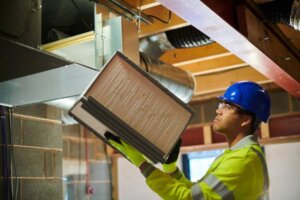
Replacement frequency depends on system usage, environment, and filter type. In most commercial buildings, filters should be checked monthly and replaced every one to three months.
However, facilities with heavy dust, high occupancy, or sensitive air quality requirements may require more frequent replacement.
Routine maintenance programs are the most effective way to ensure filters are changed on schedule and systems remain efficient.
Our Seasonal Commercial HVAC Maintenance Checklist for Business Owners provides additional guidance on preventive care practices.
How Galmiche & Sons Helps Protect Your HVAC System
At Galmiche & Sons, we help St. Louis businesses maintain reliable and efficient HVAC systems through professional maintenance and inspection services. Our technicians ensure that filters, airflow, and system components are properly maintained to prevent costly breakdowns.
Our services include:
- Commercial HVAC maintenance plans
- Air filter inspection and replacement
- System performance evaluations
- Indoor air quality improvements
- Preventive maintenance scheduling
Regular service helps extend equipment life, reduce energy costs, and improve workplace comfort.
Frequently Asked Questions
Common signs include reduced airflow, higher energy bills, increased dust in the building, and uneven temperatures.
Yes. Restricted airflow can strain components, reduce efficiency, and potentially lead to system failure over time.
Most systems require replacement every one to three months, depending on usage and environmental conditions.
The best filter depends on system design and building needs. A professional technician can recommend the appropriate filter rating and type.
Yes. Routine maintenance ensures filters are replaced on schedule and helps maintain proper airflow and system performance. Learn more commercial HVAC best practices for office buildings.
Protect Your System with Professional Commercial HVAC Service in St. Louis
Dirty filters may seem like a small issue, but they can have a major impact on system performance, energy costs, and indoor air quality. Regular maintenance is the most effective way to prevent these problems and keep your system operating at its best.
Galmiche & Sons provides expert commercial HVAC services throughout the St. Louis area, helping businesses maintain efficient, reliable, and healthy indoor environments. Contact us today to schedule service or learn more about our maintenance solutions.