

When a commercial HVAC system begins showing signs of age, declining performance, or rising operating costs, business owners are often faced with an important decision: should you invest in a commercial HVAC retrofit or move forward with a complete system replacement?
The answer depends on several factors, including the age of the equipment, energy efficiency, repair history, building requirements, and long-term business goals. While a retrofit can extend the life of an existing system and improve performance, there are situations where replacement provides a better return on investment.
For businesses throughout the St. Louis area, understanding the differences between commercial HVAC retrofits and full replacements can help you make a confident and cost-effective decision.
Learn more or schedule your commercial HVAC services today.
What Is a Commercial HVAC Retrofit?
A commercial HVAC retrofit involves upgrading specific components of an existing system rather than replacing the entire unit.
Common retrofit improvements include:
- High-efficiency motors
- Variable frequency drives (VFDs)
- Smart thermostats and controls
- Building automation systems
- Energy recovery ventilators
- Air handlers
- Compressors
- Economizers
- Advanced filtration systems
A retrofit allows businesses to improve efficiency and performance while leveraging portions of their existing HVAC infrastructure.
What Is Commercial HVAC Replacement?
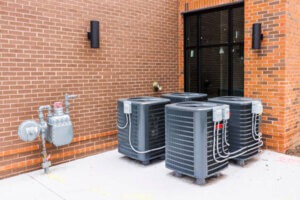
Commercial HVAC replacement involves removing the existing system and installing entirely new equipment.
Depending on the project, replacement may include:
- Rooftop units
- Split systems
- Chillers
- Boilers
- Heat pumps
- Variable refrigerant flow (VRF) systems
- Ductwork modifications
- Control systems
A complete replacement provides an opportunity to modernize the entire HVAC system and take advantage of the latest technology and efficiency improvements.
When a Commercial HVAC Retrofit Makes Sense
Your System Is Structurally Sound
If the primary components of your HVAC system remain in good condition, a retrofit may provide substantial benefits without the cost of complete replacement.
Many commercial systems can continue operating effectively for years after targeted upgrades.
You Want to Improve Energy Efficiency
One of the primary reasons businesses pursue a commercial HVAC retrofit is to reduce utility expenses.
Adding modern controls, VFDs, and energy management systems can significantly improve system performance and lower operating costs.
Businesses interested in efficiency improvements should also review our article on Energy-Efficient Commercial HVAC Systems.
Budget Constraints Are a Concern
A retrofit often requires a smaller upfront investment than full replacement.
For businesses seeking immediate performance improvements while managing capital expenditures, retrofitting may be an attractive option.
Learn more about the true cost of commercial HVAC replacement.
Building Operations Cannot Tolerate Extended Downtime
Many retrofit projects can be completed with less disruption than a complete system replacement.
This can be especially valuable for offices, healthcare facilities, retail locations, and manufacturing operations.
When Commercial HVAC Replacement Is the Better Choice
Your Equipment Is Near the End of Its Lifespan
Most commercial HVAC systems have an expected lifespan of approximately 15 to 25 years, depending on maintenance and operating conditions.
If your system is approaching the end of its useful life, investing in major upgrades may not be financially prudent.
For more guidance, see our article on Commercial HVAC System Lifespan: When to Repair vs. Replace.
Repair Costs Continue to Increase
Frequent breakdowns often indicate deeper system issues.
When repair costs become recurring and unpredictable, replacement may provide greater long-term value and reliability.
Energy Bills Continue to Rise
Older systems often consume significantly more energy than modern equipment.
A new HVAC system can dramatically reduce utility costs while improving comfort and reliability.
Your Building’s Needs Have Changed
Changes in occupancy, facility expansion, or operational requirements may create demands that the original HVAC system was never designed to handle.
A complete replacement allows for proper system sizing and modernization.
Comparing Commercial HVAC Retrofit vs. Replacement
Initial Cost
Retrofits generally require less upfront investment than replacement.
However, businesses should evaluate total lifecycle costs rather than focusing solely on initial expenses.
Energy Savings
Both options can improve efficiency, but newer systems often deliver greater long-term savings due to advanced technology and improved performance standards.
Equipment Lifespan
A retrofit extends the life of existing equipment.
A replacement resets the clock entirely, providing decades of potential service life with proper maintenance.
Reliability
While retrofits can improve reliability, aging components may still create future service concerns.
New equipment generally offers greater dependability and reduced repair needs.
Common Business Pain Points
Uncertainty About Which Option Provides Better Value
Many business owners struggle to determine whether retrofitting or replacing is the most cost-effective choice.
Our team performs detailed system evaluations to identify the option that delivers the strongest return on investment.
Fear of Unexpected Costs
No business wants surprise expenses during a major HVAC project.
We provide transparent recommendations, detailed assessments, and realistic budgeting to help clients make informed decisions.
Concerns About Business Disruption
Whether performing a retrofit or replacement, careful planning helps minimize interruptions to daily operations.
The Importance of Professional Evaluation
Every commercial property is unique. Factors such as building size, occupancy levels, equipment condition, and energy goals all influence the decision.
A professional assessment can help determine:
- Remaining equipment lifespan
- Repair history
- Energy efficiency opportunities
- Operating costs
- Future building needs
Frequently Asked Questions
A commercial HVAC retrofit upgrades specific components of an existing system to improve performance, efficiency, or functionality without replacing the entire system.
Generally, yes. However, the best option depends on equipment condition, age, repair history, and long-term business goals.
Frequent breakdowns, rising utility bills, poor comfort, and advanced equipment age are common indicators that replacement may be the better investment.
Absolutely. Many retrofit upgrades focus specifically on reducing energy consumption and operating costs. If you are considering upgrading your system, learn more about commercial HVAC trends in 2026.
With proper maintenance, many commercial HVAC systems can provide reliable service for 15 to 25 years or longer.
Partner With Galmiche & Sons for Commercial HVAC Solutions in St. Louis
Determining whether a commercial HVAC retrofit or replacement is the right choice requires expert analysis and a clear understanding of your building’s needs. The right decision can improve comfort, reduce operating expenses, increase reliability, and maximize your investment.
At Galmiche & Sons, we help businesses throughout the St. Louis area evaluate existing HVAC systems and develop cost-effective solutions tailored to their goals. Whether you need a retrofit, complete replacement, system design, or ongoing maintenance, our experienced team is here to help.
Contact Galmiche & Sons today to schedule a commercial HVAC evaluation and discover the best path forward for your facility.