Understanding your commercial HVAC lifespan is critical for making smart financial and operational decisions. For business owners and property managers in the St. Louis area, knowing when to repair a system and when to replace it can mean the difference between controlled costs and unexpected downtime.
This guide will help you evaluate your system, avoid costly mistakes, and make confident decisions that protect your investment.
To learn more or schedule commercial HVAC system replacement or service in St. Louis, contact our team today.
What Is the Average Commercial HVAC Lifespan?
Most commercial HVAC systems last between 15 and 25 years, depending on the type of equipment, usage, and maintenance history.
Typical Lifespan by System Type
- Rooftop units: 15 to 20 years
- Split systems: 15 to 20 years
- Boilers: 20 to 30 years
- Chillers: 20 to 25 years
Regular service can extend these timelines significantly. Without proper maintenance, systems often fail much sooner.
Learn how to extend system life with a commercial HVAC maintenance plan.
Key Factors That Impact Commercial HVAC Lifespan
Maintenance History
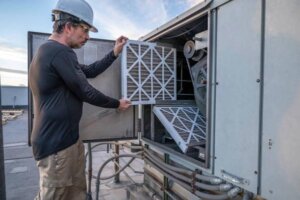
Consistent maintenance is the single most important factor. Systems that receive routine inspections and tune ups perform better and last longer.
System Usage
High demand environments such as restaurants, warehouses, and large office buildings put more strain on equipment.
Installation Quality
Improper installation can reduce efficiency and shorten system life from day one.
Environmental Conditions
St. Louis weather includes hot summers and cold winters, which can accelerate wear and tear on commercial HVAC systems.
Signs Your Commercial HVAC System Needs Repair
- Inconsistent Temperatures: Hot and cold spots throughout your building may indicate airflow or component issues.
- Rising Energy Bills: A sudden increase in utility costs often signals reduced efficiency.
- Unusual Noises or Odors: Grinding, rattling, or burning smells should never be ignored.
- Frequent Cycling: If your system turns on and off frequently, it may be struggling to maintain proper performance.
In many cases, these issues can be resolved with timely repairs.
Explore emergency repair options if your commercial HVAC is showing any of these signs.
When Repairing Makes Sense
- The System Is Relatively New: If your system is under 10 to 12 years old, repairs are usually the most cost effective option.
- The Issue Is Minor: Problems such as thermostat malfunctions, clogged filters, or worn components can often be fixed quickly.
- Repair Costs Are Low: A general rule is that if repair costs are less than 30 to 40 percent of replacement cost, repairing is typically the better choice.
When It Is Time to Replace Your Commercial HVAC System
- Your System Is Near the End of Its Lifespan: If your equipment is approaching or exceeding its expected commercial HVAC lifespan, replacement becomes a more practical option.
- Frequent Breakdowns: Repeated repairs not only add up in cost but also disrupt your business operations.
- Declining Efficiency: Older systems consume more energy, leading to higher operating costs.
- Major Component Failure: Compressor or heat exchanger failures are often expensive enough to justify replacement.
- Outdated Technology: Modern systems offer improved efficiency, better controls, and zoning capabilities.
Learn about energy-efficient commercial HVAC upgrades.
Repair vs. Replace: Cost Considerations
Short-Term Costs vs. Long-Term Value
Repairs may seem less expensive upfront, but ongoing issues can quickly exceed the cost of a new system.
Energy Savings with New Equipment
Upgrading to a modern system can significantly reduce energy usage and monthly utility bills.
Reduced Downtime
New systems provide greater reliability, minimizing disruptions to your business.
FAQs About Commercial HVAC Lifespan
Most systems last 15 to 25 years, depending on maintenance and usage.
Consider system age, repair costs, and frequency of issues. A professional evaluation can help you decide.
Want to learn more? Find out why your commercial HVAC is not cooling or get answers to commercial HVAC heating problems.
Yes. Regular maintenance is one of the most effective ways to extend the life of your HVAC system. Learn more with our commercial HVAC maintenance checklist.
Yes. Modern systems are designed to use less energy while delivering better performance.
Frequent breakdowns combined with rising energy costs are strong indicators that replacement may be the better option.
Make the Right HVAC Decision for Your St. Louis Business
Understanding your commercial HVAC lifespan helps you avoid costly surprises and plan for the future with confidence. Whether you need a repair, system upgrade, or expert guidance, making the right decision starts with a professional evaluation.
Galmiche & Sons has decades of experience helping businesses throughout the St. Louis area maintain, repair, and replace commercial HVAC systems. Our team provides honest recommendations and reliable service you can trust.
Contact Galmiche & Sons today to schedule HVAC service and get expert guidance on your commercial HVAC system.